
For Healthcare Professionals

Consider Tango Belt for older adults at elevated risk of major hip injury
Clinical indicators: Tango Belt candidates are patients with a diagnosed bone loss condition that converts a fall into a major injury (diagnosed osteoporosis, osteopenia or a prior fragility fracture) and a documented history of falls establishing that an injurious event has occurred or is actively recurring.
When fall risk reduction isn’t enough
You already work to reduce fall risk factors through medication review, strength & balance training, environmental modifications, osteoporosis treatment and other standard of care measures. For many patients, these meaningfully reduce their fall risk. For patients diagnosed with weakened or osteoporotic bone and a documented history of falls, when a fall does occur, it carries a markedly elevated risk of major hip injury. Within this population, hip fractures are a leading cause of hospitalization, loss of independence and mortality.
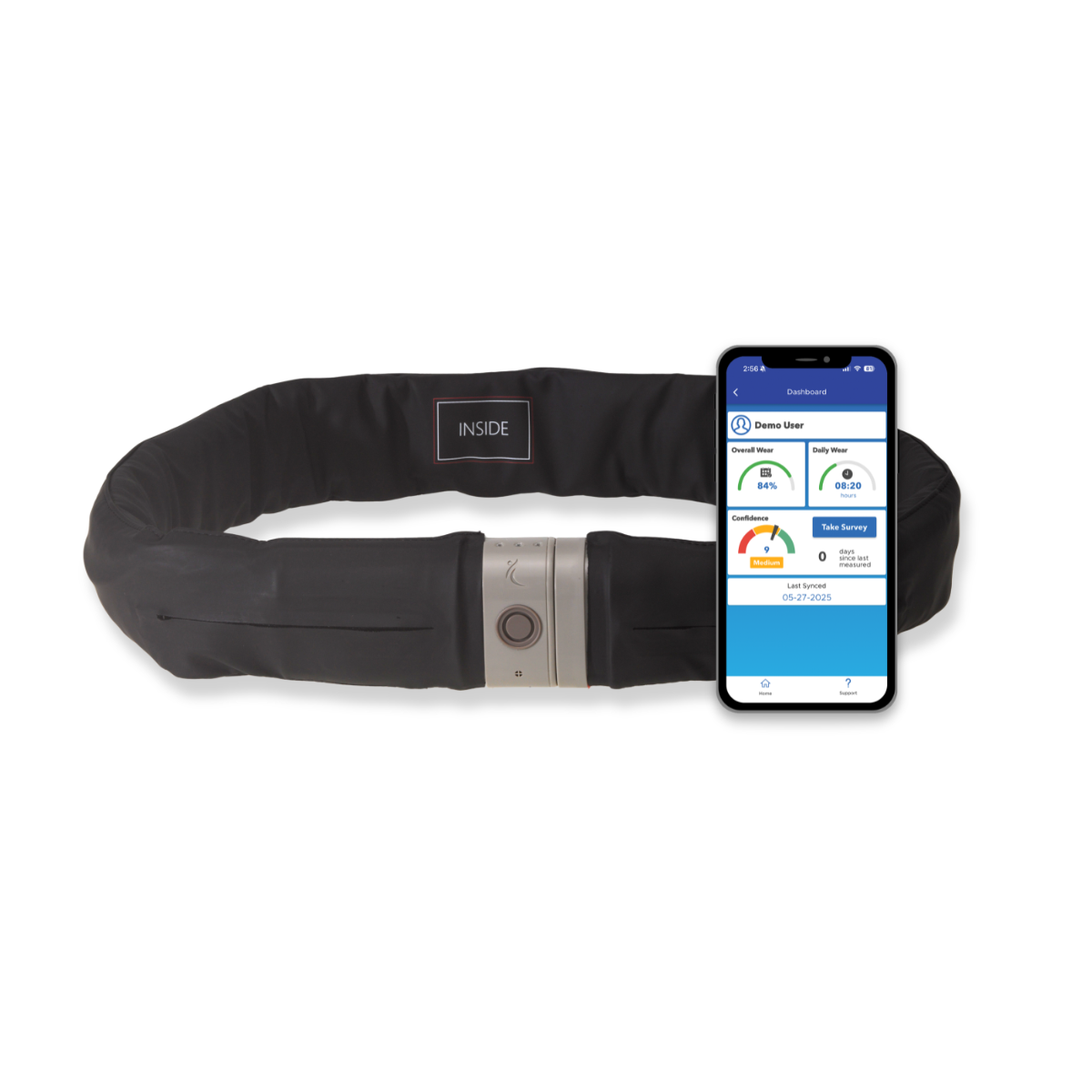
Tango Belt is a prescription medical device that delivers active treatment during a serious hip impacting fall. Its system consists of a reusable belt with built-in motion sensors and single-use airbag. Indicated as an adjunct to standard of care, Tango Belt detects a serious hip impacting fall in progress and deploys a protective airbag in under 90 milliseconds prior to impact.
Tango Belt does not prevent falls. This device is intended to mitigate the risk of hip fracture or dislocation due to falls in the patient population. In a multicenter clinical trial published in JAMDA, Tango Belt demonstrated a 90.9% relative risk reduction in major hip injury due to falls compared with standard of care alone.
Clinical evidence in older adults at high risk of fall-related hip injury
Primary clinical finding: 90.9% protective effect against major hip injury compared with standard of care alone
Supporting outcomes
66% RRR in fall-related emergency department visits
56% RRR in fall-related hospitalizations
Result: zero major hip injuries in the intervention group among those wearing the device at the time of a hip-impacting fall, versus 32 major hip injuries in the control group
Study design
Six-month, multicenter, nonrandomized controlled investigation
11 U.S. residential care sites
Prospective Tango Belt intervention group
Propensity-matched retrospective standard of care controls
Adults age 65 and older at elevated risk of major hip injury
Tango Belt used in addition to standard of care
The study enrolled 207 intervention participants, 134 completing the study and 246 retrospective control subjects analyzed.
Study considerations
Nonrandomized and unblinded design
Retrospective control group
Attrition within the intervention group
Potential selection bias
No subgroup analyses performed
Prescribing and fitting Tango Belt
Tango Belt is available in five sizes by waist circumference:
Size Waist Circumference
XS 29–32 inches
S 33–36 inches
M 37–40 inches
L 41–45 inches
XL 46–50 inches
Measure the patient’s waist circumference level with the top of the iliac crest, at the end of a normal exhale, the same landmark where the system itself sits when worn. This single measurement both selects the correct size and confirms the patient falls within the range Tango Belt has been evaluated for.
Every Tango Belt includes a built-in sizing strap to customize patient fit once a size is selected, so the belt component stays correctly positioned, and the sensors and airbag correctly oriented through normal daily movement.
Download the prescription template
Incude the following information:
Patient diagnosis
Waist measurement
Prescriber information
Email the completed prescription form to: info@tangobelt.com